Testing ED-137 and ED-138 Interoperability Standards for VoIP Air Traffic Control
ED-137 Protocol emulation, delay measurements, Voice Quality Testing and ED-138 Monitoring Solutions.
Request a Demo / QuoteATM Test Solutions MAPS™ ED-137 Radio
MAPS™ ED-137 Telephony MAPS™ ED-137 Recorder
Overview
Air traffic management (ATM) voice communications, whether Air-Ground (A-G) or Ground-Ground (G-G), were traditionally TDM-based. With the EUROCAE ED-137 interoperability standard, VoIP can now be used for air traffic control, utilizing SIP to manage sessions within an Air Traffic Services Ground Voice Network. SIP-based endpoint equipment includes Controller Working Positions (CWP), Voice Communication Systems (VCS), Radios, Recorders, and VCS/Radio Gateways, ensuring interoperability with legacy systems. Existing VCS can connect to an IP network via gateways.
Before deployment, such systems must be tested for voice quality, latency, performance, reliability, and functionality. GL tools provide end-to-end testing from radio interfaces to CWP.

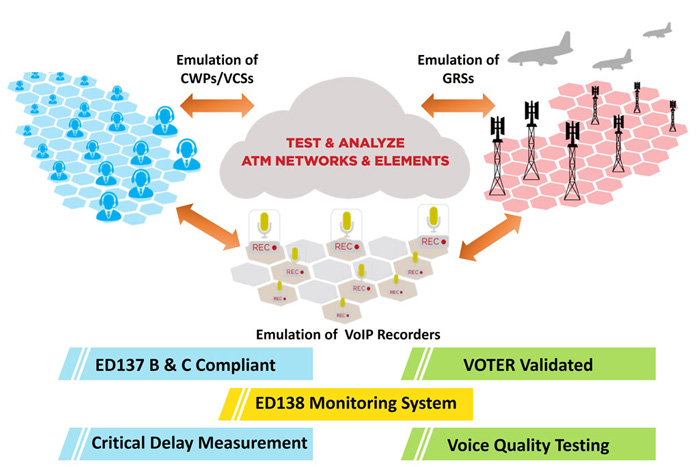
GL's Emulators are ED-137 B and C versions compliant and are VOTER validated:
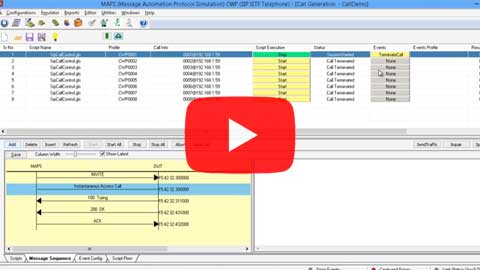
MAPS™ ED-137 Telephone Emulator can emulate hundreds of Ground-to-Ground calls, supporting all Telephone call types and scenarios such as Call Hold and Call Transfer.
MAPS™ ED-137 Radio Emulator can be configured as CWP and GRS to emulate outgoing and incoming messages in Air-to-Ground call.
MAPS™ ED-137 Recorder Emulator can emulate call recording functionality at CWP, GRS and Recorder interfaces, generating more than hundreds of recording sessions to verify performance and load testing.
Key Features
Comprehensive ED-137 ATM Emulation
- Emulate Air-to-Ground (A/G) and Ground-to-Ground (G/G) voice communications as defined by EUROCAE ED-137 standards
- Emulate Controller Working Positions (CWPs), Ground Radio Stations (GRS), Radio Media Gateways (RMGs), and VoIP Recorders
- Support ED-137 Radio, Telephone, and Recorder interfaces for interoperability, functional, and performance testing
High-Capacity Load and Stress Testing
- Generate hundreds of simultaneous Air-to-Ground and Ground-to-Ground voice sessions
- Perform scalability, capacity, and stress testing of ATM voice communication systems
- Validate system behavior under peak operational traffic conditions
ED-137 Radio Emulator
- Emulates both CWP and GRS entities for Air-to-Ground communications
- Supports ED-137B, ED-137C, Change 1, and Change 2 standards
- Supports PTT, Squelch, SELCAL, Radio Receiver Multicast, Dynamic Delay Measurement, and Voice Quality Testing
- Validated against EUROCAE VOTER tools
ED-137 Telephone Emulator
- Emulates Ground-to-Ground voice communications between CWPs
- Supports all major ATM call types including Direct Access, Indirect Access, Position Monitoring, Conference Calls, Call Transfer, Call Hold, and Call Intrusion
- Supports FAA Legacy Telephone Interworking and Override Call scenarios
ED-137 Recorder Emulator
- Emulates recorder interfaces at CWP, GRS, and Recorder Server endpoints
- Supports RTSP-based recording sessions and recorder interoperability testing
- Supports up to 500 simultaneous recording sessions
- Records audio and stores Call Record Data for verification and analysis
Critical Timing and Delay Measurements
- Measure end-to-end signaling and voice delays across Analog, TDM, and IP interfaces
- Correlate events using Packet Analyzer, Audio Analyzer, Event Data Logger, and Discrete Signal Logger
- Accurately identify delays associated with PTT, Squelch, audio transmission, and call setup events
- Centralized test orchestration through MAPS™ Administrator
Voice Quality Assessment
- Generate and analyze live speech, recorded audio, digits, tones, and signaling traffic
- Evaluate MOS, R-Factor, packet loss, jitter, latency, and RTP performance
- Verify communication quality across ATM voice networks
ATM Network Monitoring and Surveillance
- Monitor live ED-137 signaling and RTP traffic using PacketScan™ probes
- Decode SIP, RTP, and ED-137-specific protocol extensions
- Analyze call records, signaling ladders, voice quality metrics, and network performance
- Centralized monitoring through NetSurveyorWeb™ dashboards
IPv4 and IPv6 Support
- Supports deployment and testing across both IPv4 and IPv6 ATM networks
- Supports UDP and TCP transport mechanisms for signaling and media traffic
Automated Testing and Scripting
- Automate call generation, traffic scenarios, PTT actions, and recorder operations
- Support large-scale regression, interoperability, and acceptance testing
- Python API support available for automated test environments
ED-137 Test Solutions
GL’s MAPS™ ED-137 address the need for additional testing needs that may include emulating many endpoints and generating bulk calls (load testing) on the network. GL offers (Message Automation & Protocol Emulation) MAPS™, a software platform, which can emulate both Air-Ground calls (as per ED137_1B and ED137_1C: Radio) and Ground-Ground (as per ED137_2B and ED137_2C: Telephone) calls as per EUROCAE (European Organization for Civil Aviation Equipment) ED-137 standards. MAPS™ ED-137 support can emulate many user agents (end points) without requiring analog interfaces.
The software also supports emulation of Recorder interface for both Air-to-Ground and Ground-to-Ground calls at CWP, GRS and Recorder endpoints as per ED137_4B and ED137_4C versions. Air Traffic Recorder is the next generation VoIP recorder implemented as per ED-137 inter-operability standards. Specially designed for all traffic control towers and centers to simplify the recording, archiving, and playback voice communications. It can emulate AG/GG call recording towards Recorder and testing Recorder interface of CWP/VCS and GRS in ATM network.
Solutions for Air Traffic Management
Solution Architecture Components
GL's TM-ATM solution combines specialized hardware and software components to capture, timestamp, correlate, and analyze signaling, control, and voice events across Air Traffic Management networks.
GL’s solutions include rack-mounted and portable hardware equipment deployed across the Air Traffic Management network.
- Central Administrative System:
- Controls all the components of TM-ATM test suite and runs the tests to perform measurements
- Calculates the time difference between posted events and reports the precise one-way delay at different points in the network
- ED-137 Radio Emulator:
- Emulates Air-Ground calls (as per ED-137), and multiple CWPs or GRSs
- Can emulate PTT/Squelch, send and record audio to perform end-to-end voice delay and quality measurement
- Emulates all radio events such as Main/Standby Tx Rx switching, Mute/Unmute Receiver etc.
- Packet Filter System:
- Deployed in-line on an Ethernet network
- Provides 32 hardware filters to filter and timestamp the packets of interest at wirespeed
- Packet filtering can be based on Layer 2 (Ethernet), Layer 3 (IP), and Layer 4 (UDP/TCP) headers
- Can generate TTL triggers (1 Microsecond pulse) for each filter passed
- Analog VCS/Radio Emulator:
- Emulates PTT/Squelch and Audio; generates TTL triggers based on PTT On, PTT Off, Audio Start and Audio Detect (On or Off)
- Inject and record analog signals at the VCS and Radio
- Event Decoder:
- Receives filtered packets from Packet Filter System and Control Signal Detector with timestamping
- Processes received packets, sends notifications to the Controller Administrative System
- Detects audio in RTP packets to identify the beginning of voice in the stream
- Control Signal Detector:
- Monitors IO channels of the Sensoray for low-to-high and high-to-low transitions
- Used to filter and forward desired events/frames
- Monitors TTL output from the Analog Radio Controller and Packet Filter System and generates a corresponding IP packet to send to the Event Decoder
- Voice Quality Testing Software:
- Performs end-to-end voice quality assessment using industry standard ITU algorithms (PESQ and POLQA) across the ATM network
Emulating and Analyzing Air Traffic Voice Sessions
MAPS™ ED137 can be used to set up voice sessions over a network, then send and record test voice signals for assessing voice quality and performance. It emulates both Controller Working Position and Radio Media Gateway System, with following important features required to maintain reliable communication over air traffic network.
- RTP Extended Header
Supports RTP header extension format as per extended header type 0x167 (WG67). Both audio RTP and R2S packet will carry this 8 byte extended header. PTT and Squelch fields are set properly to signal voice activity in uplink or downlink. PTT-id assigned by remote end will be reflected in extended header.
- R2S-KeepAlive packets
Supports generation of R2S-KeepAlive packets while there is no active voice being transmitted or received to keep the SIP session maintained. Push-To-Talk (PTT) and Squelch fields are reset properly to signal silence (idle period) in uplink and downlink respectively.
- Supports additional SDP parameters
- R2S-Keep Alive Period: Maximum time (or frame interval) between each R2S-keep Alive packet. integer, in milliseconds.
- R2S-Keep Alive Multiplier: Number of Keep Alive packets in error or not received by endpoint before Time Out of the session
- PTT ID: PTT identity (value from 000001 to max. number of possible RTP streams, e.g.111111=63) assigned to each user agent by GRS endpoint in 200OK response to INVITE.
- Version of the used RTP HE (Header Extension).
- Frequency Identity.
- Supports Additional SIP headers 'Priority' and 'Subject’.
Every INVITE contains these two headers.
- Priority: normal (Indicates SIP call priority)
- Subject: radio (Indicates SIP call type)
- IP Spoofing
Supports IP address spoofing to generate each SIP call using different IP address from a single system.
Product Videos
Frequently Asked Questions
- What is GL's VoIP Air Traffic Management (ATM) Test Solution?
- GL's VoIP ATM Test Solution is a comprehensive suite of testing, emulation, monitoring, and analysis tools designed for Air-to-Ground (AG) and Ground-to-Ground (GG) communications. It enables validation of VoIP-based Air Traffic Management networks in accordance with EUROCAE ED-137 and ED-138 standards.
- Which EUROCAE standards are supported?
- The solution supports:
- ED-137 Volume 1 (Radio)
- ED-137 Volume 2 (Telephone)
- ED-137 Volume 4 (Recorder)
- ED-138 Network Monitoring and Performance Requirements
- What network elements can be emulated?
- GL's MAPS™ platform can emulate:
- Controller Working Positions (CWP)
- Ground Radio Stations (GRS)
- Radio Media Gateways (RMG)
- Voice Communication Systems (VCS)
- Recorder interfaces
- Telephone endpoints
- Can the solution perform Air-to-Ground (A/G) and Ground-to-Ground (G/G) call testing?
- Yes. The solution supports complete simulation, generation, reception, and analysis of both Air-to-Ground and Ground-to-Ground voice communications, including SIP signaling, RTP media streams, PTT events, and Squelch signaling.
- Does the solution support load and stress testing?
- Yes. MAPS™ ED-137 can emulate hundreds of simultaneous radio, telephone, and recorder sessions, enabling load, capacity, scalability, and performance testing of ATM communication systems.
- Can voice quality be measured during testing?
- Yes. GL provides voice quality assessment using industry-standard PESQ and POLQA algorithms. Engineers can evaluate voice clarity and service quality under different network conditions.
- How does GL measure critical delays in ATM networks?
- The Timing Measurements in Air Traffic Management (TM-ATM) solution captures, timestamps, correlates, and analyzes signaling and voice events across Analog, TDM, and IP networks to accurately measure one-way delays and system response times.
- Can the solution monitor live operational ATM networks?
- Yes. GL's monitoring tools, including PacketScan™ and NetSurveyorWeb™, provide real-time monitoring of signaling, RTP streams, packet loss, jitter, latency, MOS scores, and network performance across ATM networks.
- Does the solution support IPv6 networks?
- Yes. The ED-137 Radio, Telephone, and Recorder emulators fully support both IPv4 and IPv6 environments, making them suitable for modern ATM network deployments.
- Can network impairments be simulated for testing?
- Yes. Using IPNetSim™, users can emulate WAN conditions such as:
- Latency
- Jitter
- Packet loss
- Bandwidth limitations
- Network congestion
- Who typically uses these ATM test solutions?
- The solutions are widely used by:
- Air Navigation Service Providers (ANSPs)
- ATM System Integrators
- VCS Manufacturers
- Radio Gateway Vendors
- Recorder Vendors
- Aviation Test Laboratories
- Field Deployment and Commissioning Teams
- What are the key benefits of GL's ATM Test Solutions?
- Key benefits include:
- Comprehensive ED-137/ED-138 compliance testing
- Realistic ATM network emulation
- Automated test execution
- End-to-end delay measurement
- Voice quality assessment
- Load and stress testing
- Live network monitoring
- Faster troubleshooting and deployment validation
These FAQs are written in a search-engine-friendly format and align with the questions typically asked by ATM engineers, ANSPs, procurement teams, and system integrators evaluating VoIP Air Traffic Management testing solutions.
Critical Delay Measurements using Audio Analyzer & Packet Analyzer
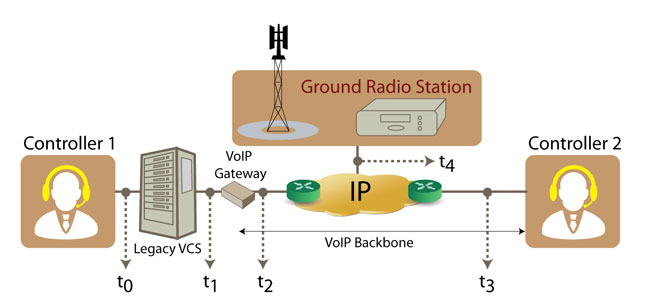
Measuring delay, jitter and packet loss through air traffic networks is crucial and network testers must precisely time events. Delay testing and verification will be particularly important with the transition to IP networks, which will introduce packetization delays, jitter buffer delays and other uncertainties. For example, measuring the time from which the Air Traffic Controller presses ‘Push To Talk’ to the time when the IP packet indicates that the PTT bit is set to 1 is an essential testing scenario. This delay measurement is possible using GL’s Audio Analyzer as well as GL’s Packet Analyzer.
For more details, please visit Critical Delay Measurements in Air Traffic Management webpage.
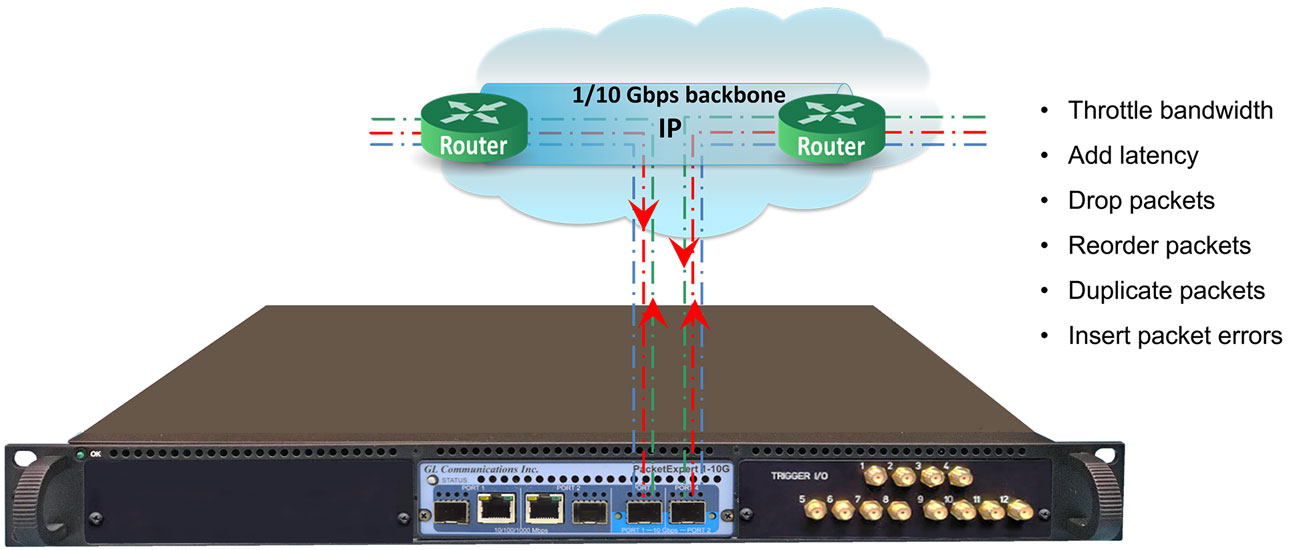
WAN IP Link Emulation using GL’s IPNetSim™
GL can emulate various impairments that occur on Wide Area Networks (WAN) using a tool called IPNetSim™. This appliance is connected in-line on an Ethernet network and acts as a transparent bidirectional Ethernet link. The different WAN link speeds that can be emulated are - RS232/DSL/Modem/T1 E1/T3 E3 and more.
IPNetSim™ can emulate the impairments listed below:
- Bandwidth emulation from 100 Kbps up to 10 Gbps in increments of 1 Kbps emulating various WAN technologies like Modem, DSL, T1/E1/T3/E3/OC3/OC12 etc
- Latency/Delay emulation from 0 milliseconds to 8 seconds, with single, uniform and random distributed delay emulation capabilities
- Packet Loss emulation, from 0 to 100%
- Packet Reordering emulation, from 0 to 100% with random reinsertion delay
- Packet Duplication emulation, as a percentage of total packets, from 0 to 100%
- Logic Error Insertion - inserts error anywhere with in the frame, from 10-1 to 10-9 rate
Voice Quality Testing (VQT)
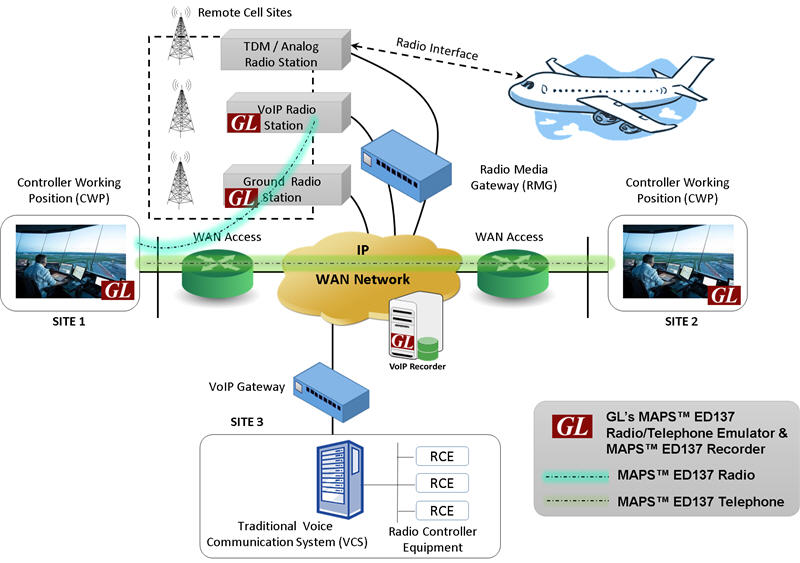
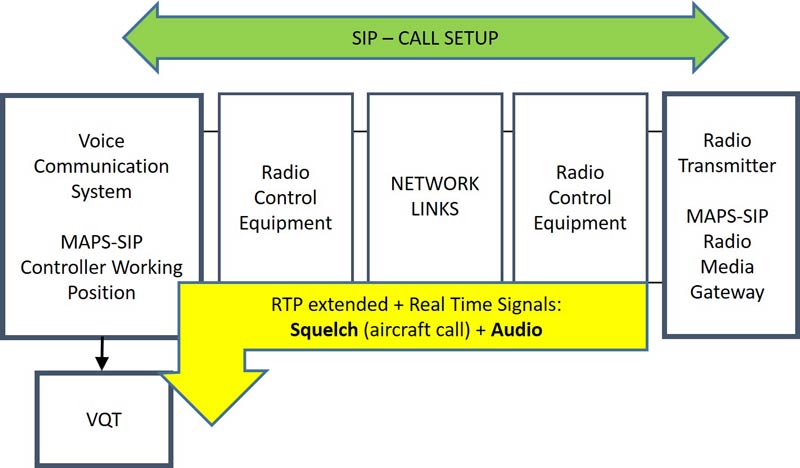
The figure above shows MAPS™ ED137 emulating a call from an aircraft, by sending a voice file over the radio network to an air traffic controller. When there is no voice transmission from the aircraft, only keep-alive packets are sent from radio towards the VCS/CWP endpoint. The PTT keying by a pilot triggers voice transmission towards the ground and keep-alive packets are replaced by audio packets from radio towards the VCS/CWP. The voice traffic is received at the controller side and recorded. With GL’s Voice Quality Testing application, the received file is compared against the original and a standard ITU-based voice quality score is derived. The RTP traffic can also be converted to analog and output to a PC speaker.
For more details on GL’s VQT, please visit Voice Quality Testing - PESQ-POLQA
Testing Radio/Network Links – Answer and Send Voice with Squelch
ATM Network Quality Monitoring Tools per ED-138
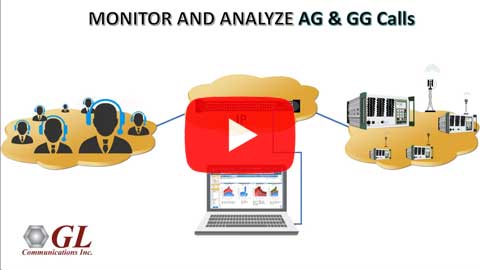
GL's PacketScan™ software captures and monitors live signaling and traffic over Ethernet and IP networks. It captures, decodes, segregates, monitors and collects statistics on all IP calls, as per EUROCAE ED-138. Easily view Ground-to-Ground and Air-to-Ground calls.
- Monitor diverse traffic types including digits, tones, voice, video, fax over IPv4 and IPv6 networks
- Segregates, captures, and collects statistics
- Monitors quality of service on voice calls
- Permits analysis of adherence to protocol standards for the system under test or observation
- Provides graphical presentation of analysis including protocol ladder diagrams
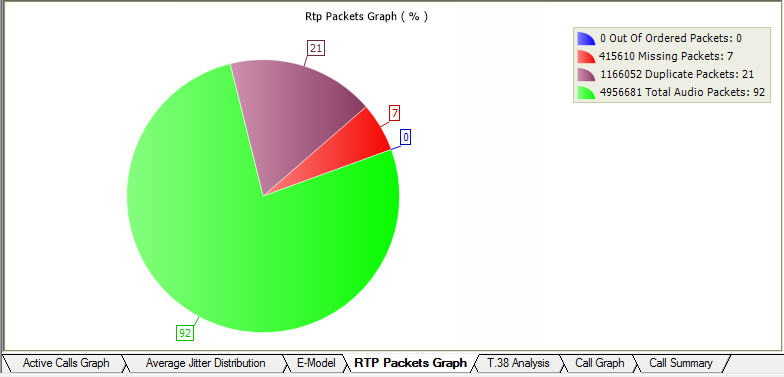
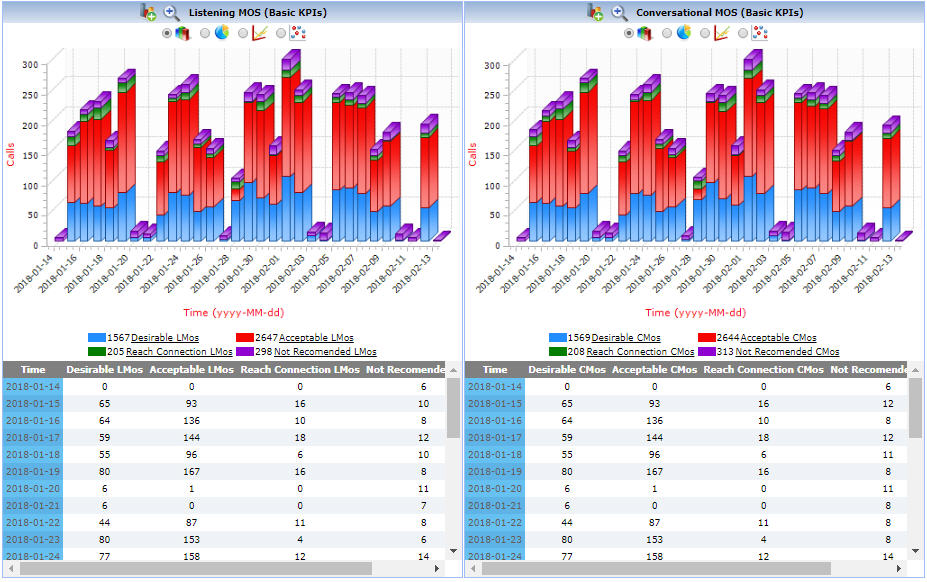
GL’s NetSurveyorWeb™ is a centralized web-based network surveillance system that connects to PacketScan™ probes for displaying Call Details Records (CDRs), measurement results, and network performance statistics.
Possible session measurements include -
- Voice Quality (MOS, R-Factor)
- Signal level, Nosie Level, and Echo
- Round trip and one-way delay measurements
- Signaling Messages and Traffic Types
- Call Duration and Call Volume
- Call Status (Completed, Busy, Success, Failure)
- Physical Layer Alarms (Link Status, Carries Loss, Sync Loss, ...)
Resources
| Item No | Air Traffic Management |
| PKS118 | MAPS™ ED-137 Radio (Includes PKS107, & PKS102) |
| PKS119 | MAPS™ ED-137 Telephone (Includes PKS102) |
| PKS117 | MAPS™ ED-137 Recorder (Includes PKS102) |
| PKS102 | RTP Soft Core for RTP Traffic Generation |
| PKS107 | RTP EUROCAE ED137 |
| Item No. | Related Software |
| PKV100 | PacketScan™ (Online and Offline) |
| PKV120 | PacketScan™ HD w/4 x 1GigE |
| PKV120p | PacketScan™ HD w/4 x 1GigE - Portable |
| PKS108 | RTP Voice Quality Measurements |
| PKS109 | MAPS™ High Density RTP Generator |
| PKS111 | MAPS™ Remote Controller |
| PKS112 | Message Session Relay Protocol for MAPS-SIP |
| PKS170 | CLI Support for MAPS™ |
| PKS106 | RTP Video Traffic Generation |
| PCD103 | Optional Codec – AMR – Narrowband (requires additional license) |
| PCD104 | Optional Codec - EVRC (requires additional license) |
| PCD105 | Optional Codec – EVRC-B (requires additional license) |
| PCD106 | Optional Codec – EVRC-C (requires additional license) |
| PCD107 | Optional Codec – AMR - Wideband (requires additional license) |
| PCD108 | Optional Codec - EVS (requires additional license) |
| PCD109 | Optional Codec - Opus (requires additional license) |
| Item No. | GTP Mobile Traffic Options |
| ETH101 ETH102 ETH103 |
MobileTrafficCore - GTP MobileTrafficCore - Gateway MobileTrafficCore for Gb Interface |
| Item No. | Related Hardware |
| IPN507 | IPNetSim™ & IPLinkSim™ Options for 1G, 2.5G and 10G |
| Presentation |
|---|
| Test Solutions for ATC Presentation |
| Signaling and Traffic Emulation using MAPS - Presentation |
Webinars
ED-137 Radio Testing and ED-138 Monitoring

Air Traffic Management Test Solutions

VoIP ATM Test Solutions
Workshop 1 : MAPS™ ED-137 Radio Emulator
Workshop 2 : MAPS™ ED-137 Telephone Emulator
ED-137B Test Solutions
Testing VoIP Air-to-Ground Calls per ED-137C Radio
Enhanced Test Tools for ED-137B VoIP Air Traffic Control