2-Wire Voice/Data Capture using Dual UTA HD/ tProbe™
Overview
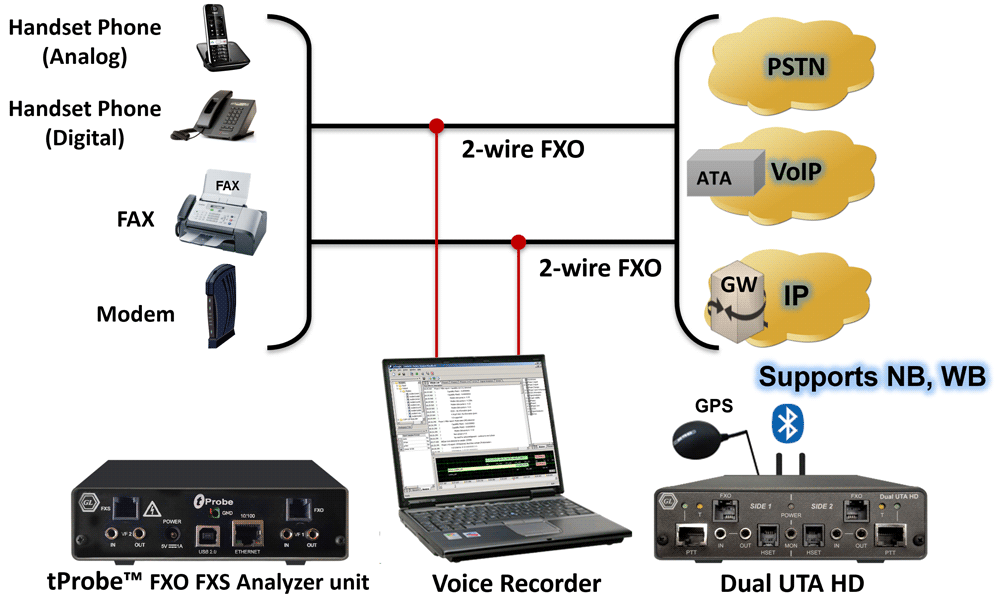
GL provides two different solutions to capture signals on 2 Wire analog lines (FXO ports):
- Using Voice Recorder with Dual UTA HD
- Using tProbe™ FXO port
Voice Recorder with Dual UTA HD
GL's Voice Recorder Software is used with Dual UTA HD hardware to non-intrusively capture the voice, fax, or modem traffic over a 2-wire analog interface.
The Dual UTA HD is a comprehensive hardware device designed to interface two completely separate networks to test the voice quality. The Dual UTA HD can be directed to automatically send and record sample voice files between nodes of a telephony network, which can then be submitted to software application for analysis.
tProbe™ FXO FXS Analyzer/Emulator
GL's tProbe™ is an enhanced USB based T1 E1 VF FXO FXS Datacom Analyzer / Emulator. This hardware incorporates all the features of the previous analyzer such as portability, USB interface, remote accessibility, scripting, and a vast collection of optional applications.
The tProbe™ FXO FXS ports permits non-intrusive capture and analysis of voiceband signal from a two-wire telephone line. This feature allows you to capture and analyze data from a two-wire telephone line, as well as to generate and transmit analog data onto that two-wire line. FXO FXS testing can also be performed using MAPS™ FXO FXS Emulator application. MAPS™ provides a facility to place call/answer incoming call on both FXO and FXS ports, and automate the entire testing process using scripts.
Main Features
- A USB plug 'n' play recorder that does not tie up the sound card on the PC
- Enables recording of the following transmissions:
- Data (Modem)
- Fax
- Mobile Fax
- T.38 Fax
- Passive Voice
- X, Y, Z Modem and others
- Supports 2 independent FXO ports per Dual UTA HD connecting to any PSTN, ATA, and next generation Gateways
- Wide Band (WB) and Narrow Band (NB) support (for HD and SD Audio) voice capture on 2-wire Analog interface
- Non-intrusive, bi-directional traffic capture into a single PCM file
- Dual UTA HD supports WB 2-wire Analog FXO & VF interfaces for the capture
- Auto Trigger Threshold (-dbm) record option
- Supports all types of measurements associated with a 2-wire analog call
- Perform Post Dial Delay (PDD) & Post Ringback Delay (PRD) measurements (within VQuad™)
- Use with GL Insight™ for modem / fax data capture and analysis
- Use with Voice-band Analyzer (VBA) application to perform voice band analysis
2-Wire Voice/Data Capture using Voice Recorder and Dual UTA HD:
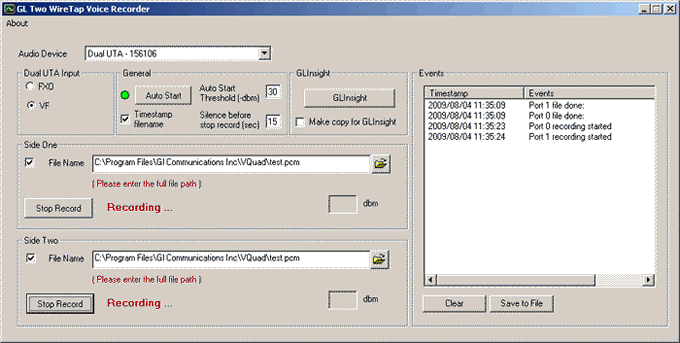
Voice Recorder software allows to non-intrusively capture the signals on FXO or VF ports on DUAL UTA HD connected to 2-wire lines.
The Dual UTA HD unit includes dual 2-wire FXO ports, which supports WB 2-wire analog FXO and can be connected directly to the 2-wire lines. One can non-intrusively 'tap' into the analog 2-wire line via the RJ-11 interface and capture the bi-directional voice/data. The recorded voice/data is automatically saved into a single PCM file. The recording can be automated using auto trigger options, or manually controlled.
For more information, please visit Automated FXO testing using Dual UTA HD.
2-Wire Voice/Data Capture using tProbe™
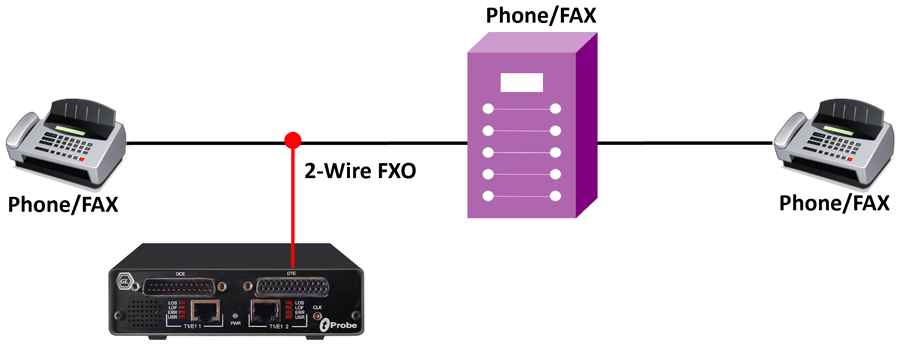
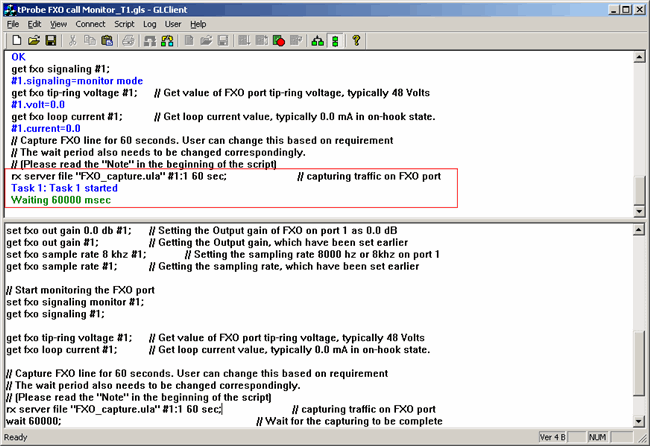
tProbe™ FXO FXS permits non-intrusive capture and analysis of voiceband signal from a two-wire FXO / FXS lines. With the tProbe™ FXO call scripts, one can perform the basic operations during the call setup such as the Off-hook/On-hook, check dial tone, transmit / receive DTMF digits, monitor ring signal, and record traffic to pcm file. The signals so monitored over the FXO ports can be captured as A-Law, µ-Law, 16-bit PCM (Intel), and 16-bit PCM (Motorola) file formats. For more information, please visit Analog FXO FXS Testing using tProbe webpage. With additional FAX simulator license (XXFT0), tProbe™ FXO port can be used to send/receive FAX over analog lines as shown in the figure below.
For more details, refer to FAX Simulation over PSTN, T1 or E1
Adobe Audition / GL Insight- for Voice/Fax /Modem Analysis
The captured files are used with Adobe Audition software for Voice analysis or GL Insight™ software for Modem and Fax analysis.
GL Insight™ verifies fax and modem calls by analyzing the recorded PSTN files (or IP stream). The Voice Recorder helps record these PSTN calls to the required location. The analyzer can then report with a detailed log file for easy event tracking.
Capturing on the 2-wire with a single capturing point, GLInsight™ should be able to decode protocols:
- V.21
- V.22
- V.22bis
- V.32 - with an active 2-wire probe
- V.34 - with an active 2-wire probe
- V.90 - with an active 2-wire probe
- V.17
- V.34fax
GLInsight™ supports additional protocols in a 4-wire captured environment:
Supported Protocols for Fax over PSTN
- V.34HD, V.17, V.33, V.29, V.27, V.21, T.30, T4 / T6
Supported Protocols for Modem over PSTN
- V.92 (Quick Connect and Modem-on-Hold supported. PCM-upstream not supported)
- V.90
- V.34
- V.32bis / V.32
- V.22bis / V.22
- V.21
- V.23
- Bell 103 / Bell 212
Supported Start-up Protocols
- V.8
- V.8bis
- V.8 short
Applications
- Provides bottom-up deep diagnosis of the call
- Provide info from data pump layer up to tiff picture
- Helps solve interoperability issues
- Diagnoses physical layer problems
- Diagnoses network layer problems
Additional GL Insight™ Screenshots
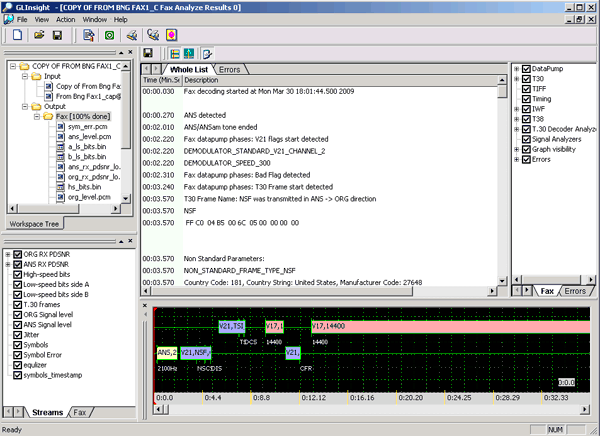
Screen Shot of GL Insight™ Fax Data Analysis over PSTN
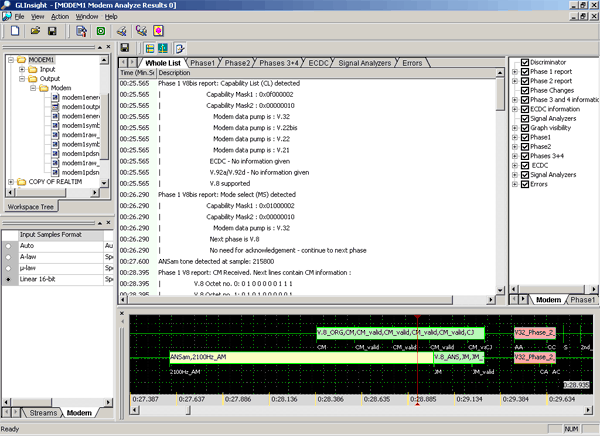
Screen Shot of GL Insight™ Modem Data Analysis over PSTN
Additional Adobe Audition Screenshots
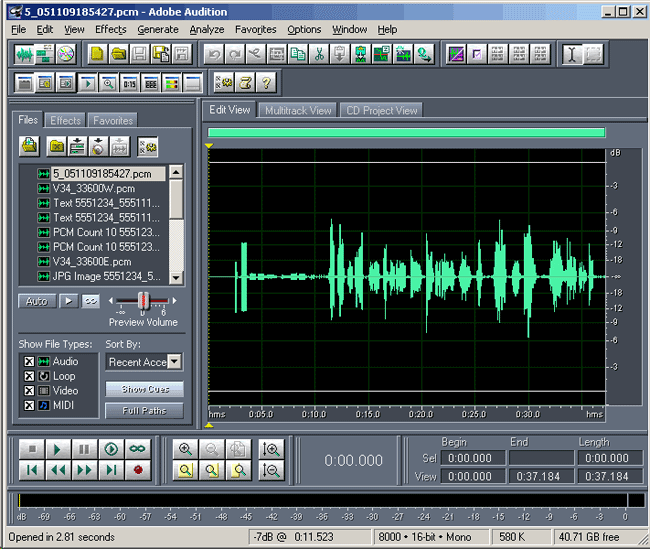 Screenshot of Analysis of the recorded voice file in Adobe Audition
  Screenshot of Analysis of the recorded Fax Signal in Adobe Audition
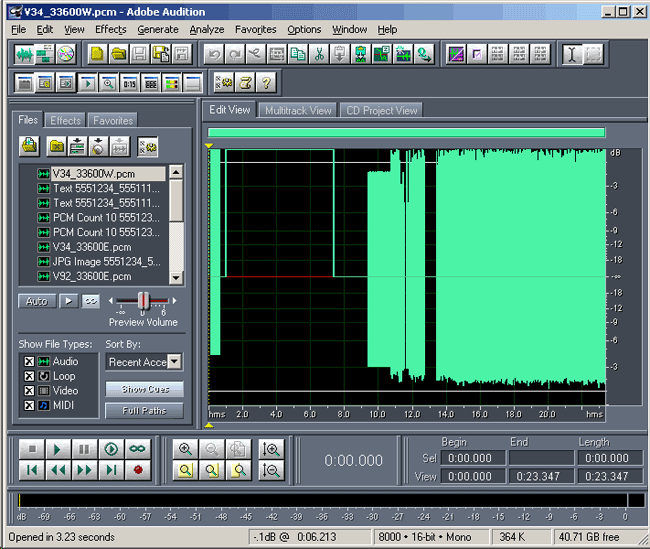 Screenshot of Analysis of the recorded Modem Signal in Adobe Audition
Post Dial Delay (PDD) & Post Ringback Delay (PRD) measurements using GL's VQuad™ software
The analysis associated with the PDD detects the trailing edge of the last DTMF digit sent as part of the placed call. It then detects the leading edge of the Ringback tone coming from the far end switch. The PDD is the measurement between these two events.
Both the analysis functions require the use of GL's 2-wire phone tap along with GL's VQuad™ software. The VQuad™ scripts provide a mechanism to automate the required tone recording and analysis.
Resources
Note: PCs which include GL hardware/software require Intel or AMD processors for compliance.